FUNGAL NAIL TREATMENT QUEENSTOWN
Fungal Nails (Onychomycosis)
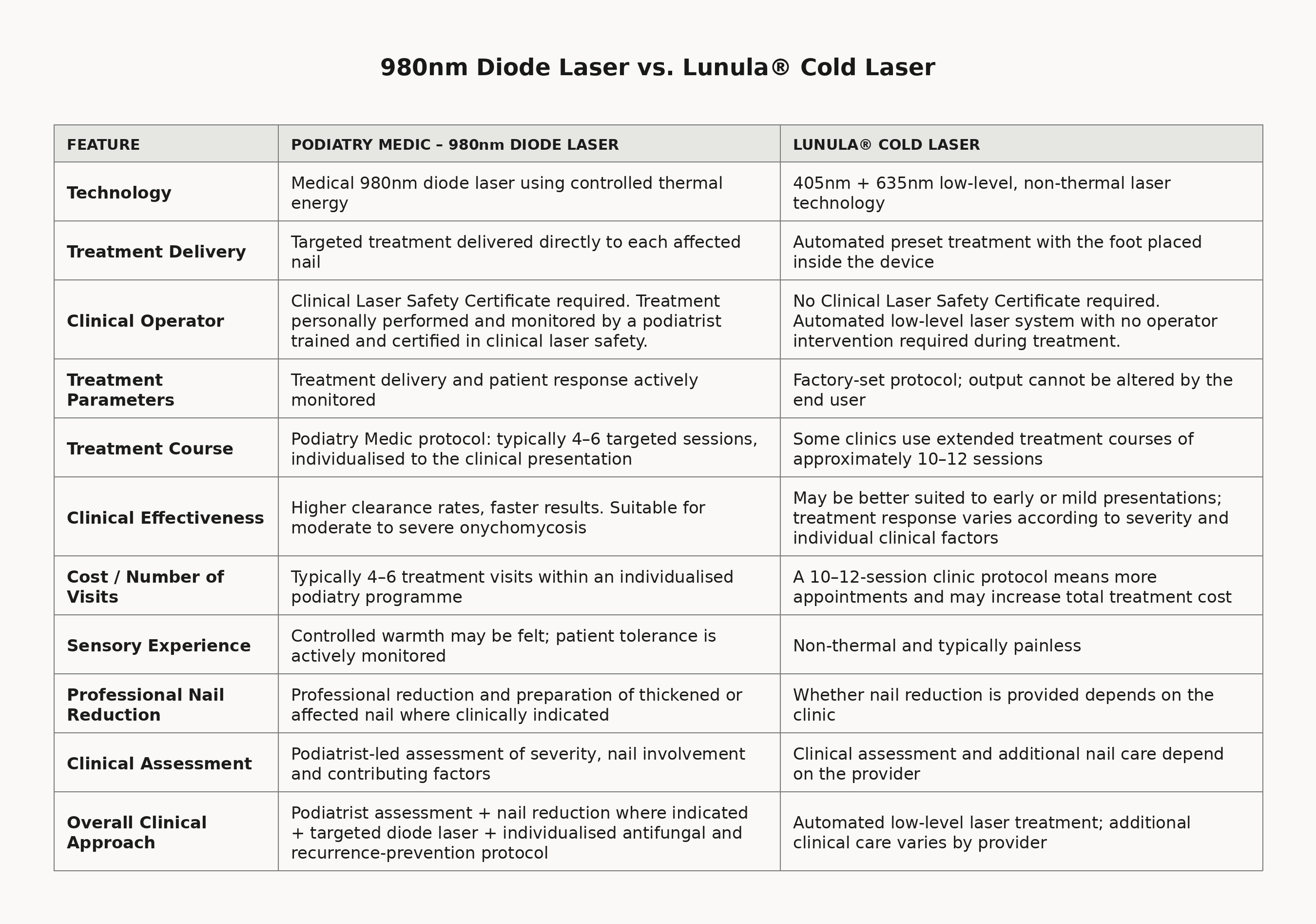
Fungal nail infections can cause thickened, discoloured, brittle or distorted nails and can be difficult to clear without addressing both the infected nail and the surrounding environment.At Podiatry Medic, treatment is tailored to the individual nail and may combine professional nail reduction, 980nm diode laser therapy and a pharmaceutical-grade treatment protocol designed to support healthy nail regrowth.Our Podiatrist has completed advanced postgraduate training in fungal nail management and is certified in the clinical use of laser technology. Where appropriate, we also discuss factors that may contribute to persistent or recurrent infection and strategies to reduce reinfection.Diode Laser vs. Low-Level Laser (Cold Laser) - Know The Difference
Advanced Diagnosis & Treatment for Fungal Nail Infections

Podiatry Medic Fungal Nail Treatment Protocol
A personalised, podiatrist-led approach to treating onychomycosis
Initial Consultation
Every treatment plan begins with a comprehensive assessment. This may include:
Complete nail and skin examination
Medical history, medications and relevant health conditions
In-house fungal testing when the diagnosis is uncertain
Clinical photographs for baseline comparison
Assessment of potential contributing and reinfection factors
An individual treatment plan based on the extent and severity of infection
Treatment Options Based on Severity
1️⃣ Mild / Early Infection
For early or limited fungal nail involvement:
Professional nail reduction where indicated
Pharmaceutical-grade topical antifungal treatment
Home treatment and prevention protocol
Nutritional or supplement recommendations where appropriate
Regular clinical review
2️⃣ Moderate Infection – 980nm Diode Laser + Topical Therapy
For more established infection, treatment may combine:
Professional reduction and preparation of affected nails
Targeted 980nm diode laser treatment
Pharmaceutical-grade topical antifungal therapy
Individualised home and reinfection-prevention protocol
Clinical monitoring of nail regrowth
Treatment is typically delivered over 4–6 targeted sessions, depending on the individual clinical presentation and response.
3️⃣ Severe, Resistant or Recurrent Infection
More advanced cases may require a combination approach involving:
980nm diode laser treatment
Professional nail reduction
Pharmaceutical-grade topical antifungal treatment
More than 4–6 sessions where clinically indicated
Discussion of oral antifungal treatment where appropriate
More intensive management of contributing and reinfection factors
Preventing Reinfection
Successful fungal nail management doesn't stop at treating the nail. We provide an individual prevention strategy which may include treatment of concurrent athlete's foot, footwear hygiene, laundering advice and antifungal products where appropriate.
Nail Regrowth Takes Time
Treatment targets the fungal infection, but the damaged portion of the nail must still grow out. Toenails grow slowly, so visible improvement occurs progressively and complete replacement of the affected nail can take approximately 9–12 months or longer.
Book Your Fungal Nail Assessment
Whether your infection is early, established or has failed previous treatment, we can assess the extent of involvement and recommend an appropriate treatment plan.